


Application of Grouting Filling Technology in Foundation Treatment of Goaf
-
摘要: 我国城镇化不断推进,城市建设深入发展,在采空区上开发和建设的需求日益增多。采空区治理具有隐蔽性和不确定性,通过某采空区注浆充填的工程实例,从场地采空区的分布情况、治理方案的比选、施工重点问题的处理等方面对此进行了分析。在此基础上,综合采用多道瞬态面波试验、波速测试等多种物理探测手段,并结合钻探取芯、沉降监测等手段对采空区填充处理效果进行评价。结果表明,该项目注浆充填效果良好,满足设计要求,可为采空区注浆充填治理工程提供参考。Abstract: With the continuous promotion of urbanization and the in-depth development of urban construction, the demand for development and construction in goaf is increasing. The concealment and uncertainty of goaf treatment are analyzed from the aspects of the distribution of goaf, the comparison and selection of treatment schemes, and the treatment of key construction problems through an engineering example of grouting filling in a goaf. A variety of physical detection methods, such as multi-channel transient surface wave test and wave velocity test, were comprehensively used, and goaf filling treatment effect was evaluated combining with drilling and coring, settlement monitoring and other means. The results show that the grouting filling is effective and meets the design requirements, which can provide a reference for the grouting filling treatment project in goaf.
-
表 1 拟建建筑设计条件概况
建筑编号 层数(地上/地下) 建筑高度/m ±0.00绝对标高/m 基础埋深/m 基底荷载/kPa 基础形式 1#车库、食堂、图书馆 2/2 14.80 135.20 13.40 140 筏板 2#综合教学楼 5(局部4)/2 20.0(局部18.5) 135.20 8.40~13.40 210 筏板 3#文艺楼 2/0 12.0 135.20 2.50 110 筏板  下载: 导出CSV
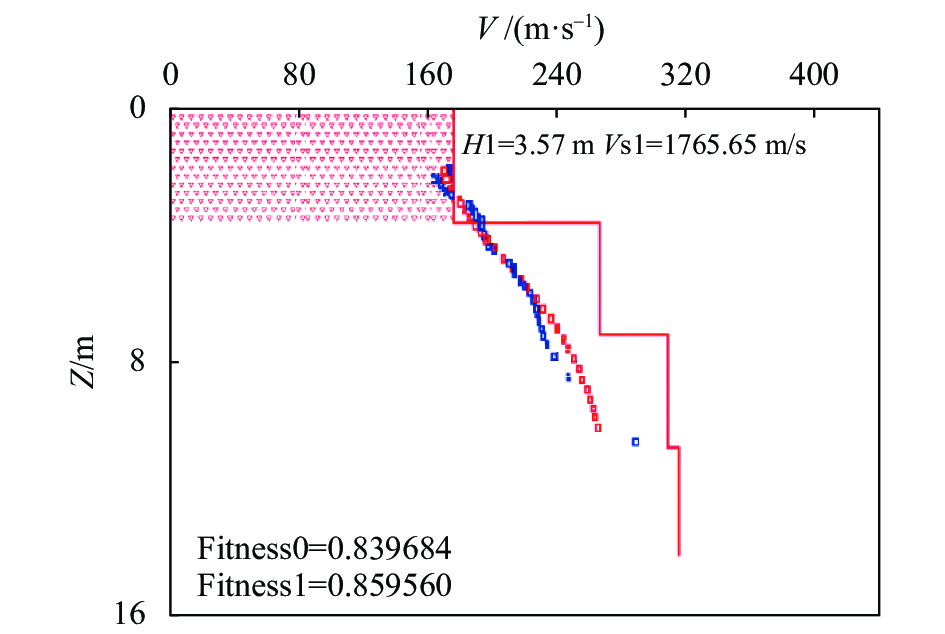
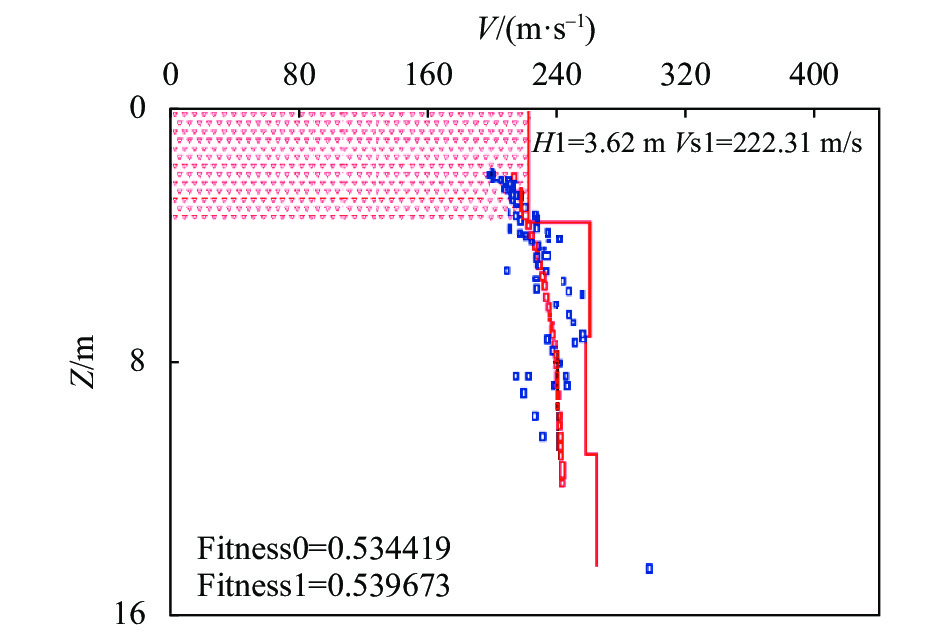
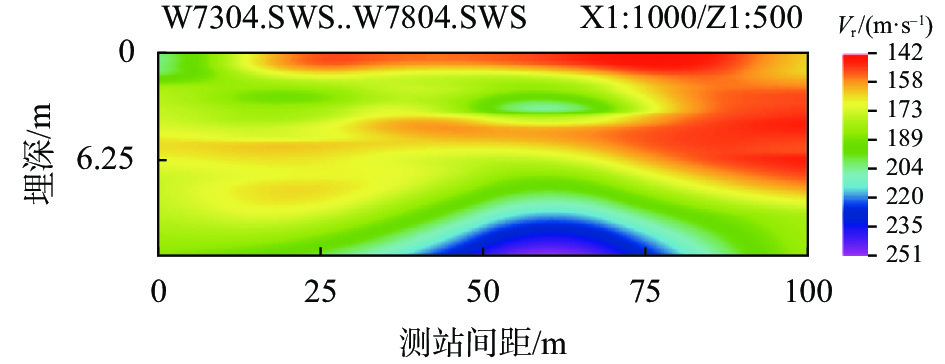
表 2 测线T和测线7面波频散数据统计表
测线编号 测点编号 测深H/m 面波波速
Vr/(m·s-1)平均面波波速
Vr/(m·s-1)测T T-1 3.57 175.85 181.18 T-2 3.99 159.08 T-3 4.62 185.57 T-4 4.74 204.22 测7 7-1 3.81 206.11 223.82 7-2 3.62 222.31 7-3 3.66 235.27 7-4 3.47 242.10 7-5 3.20 234.00 7-6 3.80 203.14
下载: 导出CSV
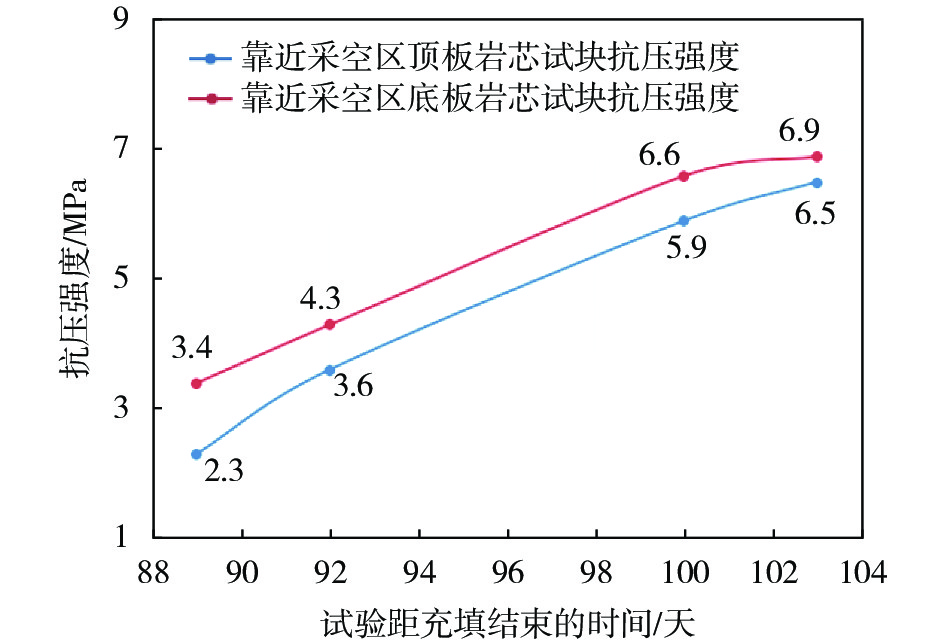
表 3 岩芯抗压试验数值统计表
测试钻孔编号 试样编号 距填充
结束时间/天抗压强度
/MPa平均抗压
强度/MPa测试孔1 1-1(靠近顶板) 92 3.6 3.6 92 4.3 92 3.1 1-2(靠近底板) 92 4.3 4.3 92 4.5 92 4.0 测试孔2 2-1(靠近顶板) 95 5.1 5.0 95 5.0 95 5.1 2-2(靠近底板) 95 5.8 5.8 95 5.9 95 5.8 测试孔3 3-1(靠近顶板) 89 2.2 2.3 89 2.1 89 2.6 3-2(靠近底板) 89 3.6 3.4 89 2.9 89 3.9 测试孔4 4-1(靠近顶板) 103 6.1 6.5 103 6.5 103 7.0 4-2(靠近底板) 103 7.3 6.9 103 6.8 103 6.7 测试孔5 5-1(靠近顶板) 100 6.1 5.9 100 5.5 100 6.0 5-2(靠近底板) 100 6.2 6.6 100 7.0 100 6.5
下载: 导出CSV
表 4 沉降观测变化值
点号 初始观测值/m 最终观测值/m 累计变化量/mm JK1 44.05332 44.04249 −10.83 JK2 45.81365 45.80272 −10.93 JK3 48.06147 48.05179 −9.68 JK4 49.10262 49.09274 −9.88 JK5 49.01595 49.00546 −10.49 JK6 49.14788 49.13760 −10.28 JK7 49.71239 49.70267 9.72 JK8 49.73460 49.72376 −10.84 JK9 49.58736 49.57693 −10.43 JK10 49.64322 49.63401 −9.21 JK11 49.63458 49.62319 −11.39 JK12 49.55748 49.54710 −10.38 JK13 49.50077 49.49112 −9.65 JK14 49.57281 49.56157 −11.24 JK15 49.38796 49.37828 −9.68 JK16 48.58033 48.57049 −9.84 JK17 47.59014 47.58057 −9.57 JK18 46.00336 45.99129 −12.07
下载: 导出CSV
-
[1] GB 51044—2014 煤矿采空区岩土工程勘察规范[S]. [2] GB 51180—2016 煤矿采空区建(构)筑物地基处理技术规范[S]. [3] 化建新, 郑建国. 工程地质手册(第五版)[M]. 北京: 中国建筑工业出版社, 2018. [4] 滕永海,张俊英. 老采空区地基稳定性评价[J]. 煤炭学报,1997,22(5):504-508. [5] 宫凤强,李夕兵,董陇军,等. 基于未确知测度理论的采空区危险性评价研究[J]. 岩石力学与工程学报,2008,27(2):323-330. doi: 10.3321/j.issn:1000-6915.2008.02.014 [6] 张耀平,曹 平,袁海平,等. 复杂采空区稳定性数值模拟分析[J]. 采矿与安全工程学报,2010,27(2):233-238. doi: 10.3969/j.issn.1673-3363.2010.02.019 [7] 龙浩波,张可能,胡小林. 邵东石膏矿采空区场地稳定性评价[J]. 土工基础,2017,31(2):172-174. [8] 孙 辉,王起超. 某煤矿采空区场地稳定性综合评价[J]. 现代矿业,2018,34(6):21-23. [9] 司冬冬. 煤矿采空区场地稳定性评价[J]. 科学大众,2020,(7):268-269. [10] 王彤标,陈金宏,王刘文. 贵州西部煤矿采空区场地稳定性影响因素分析[J]. 地灾与环境保护,2020,31(2):62-67. [11] 罗 达. 胶济电化采空区注浆处理施工技术[J]. 铁道标准设计,2006,(8):6-8. doi: 10.3969/j.issn.1004-2954.2006.09.003 [12] 杨镜明,魏周政,高晓伟. 高密度电阻率法和瞬变电磁法在煤田采空区勘查及注浆检测中的应用[J]. 地球物理学进展,2014,29(1):362-369. doi: 10.6038/pg20140151 [13] 张幸伟,李修忠,郭士礼,等. 相邻道瞬态瑞雷波法在黄土区窑洞探测中的应用[J]. 公路交通科技(应用技术版),2014,10(114):349-351. [14] 姜文富. 章丘市某厂房采空区物探和钻探综合探查[J]. 土工基础,2017,31(3):363-367. -

图(7) / 表(4)
计量
- 文章访问数: 608
- HTML全文浏览量: 144
- PDF下载量: 59
- 被引次数: 0
