Abstract:
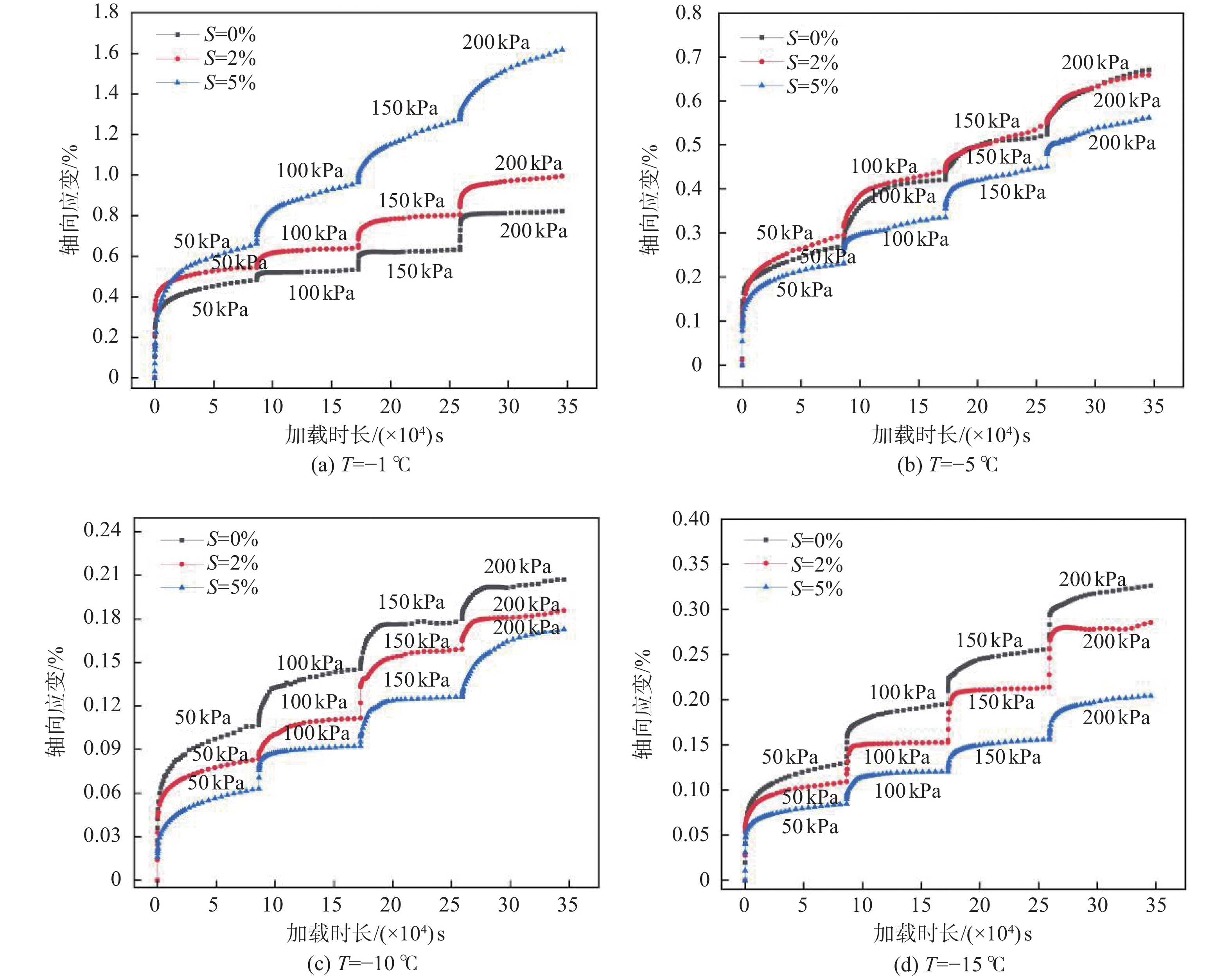
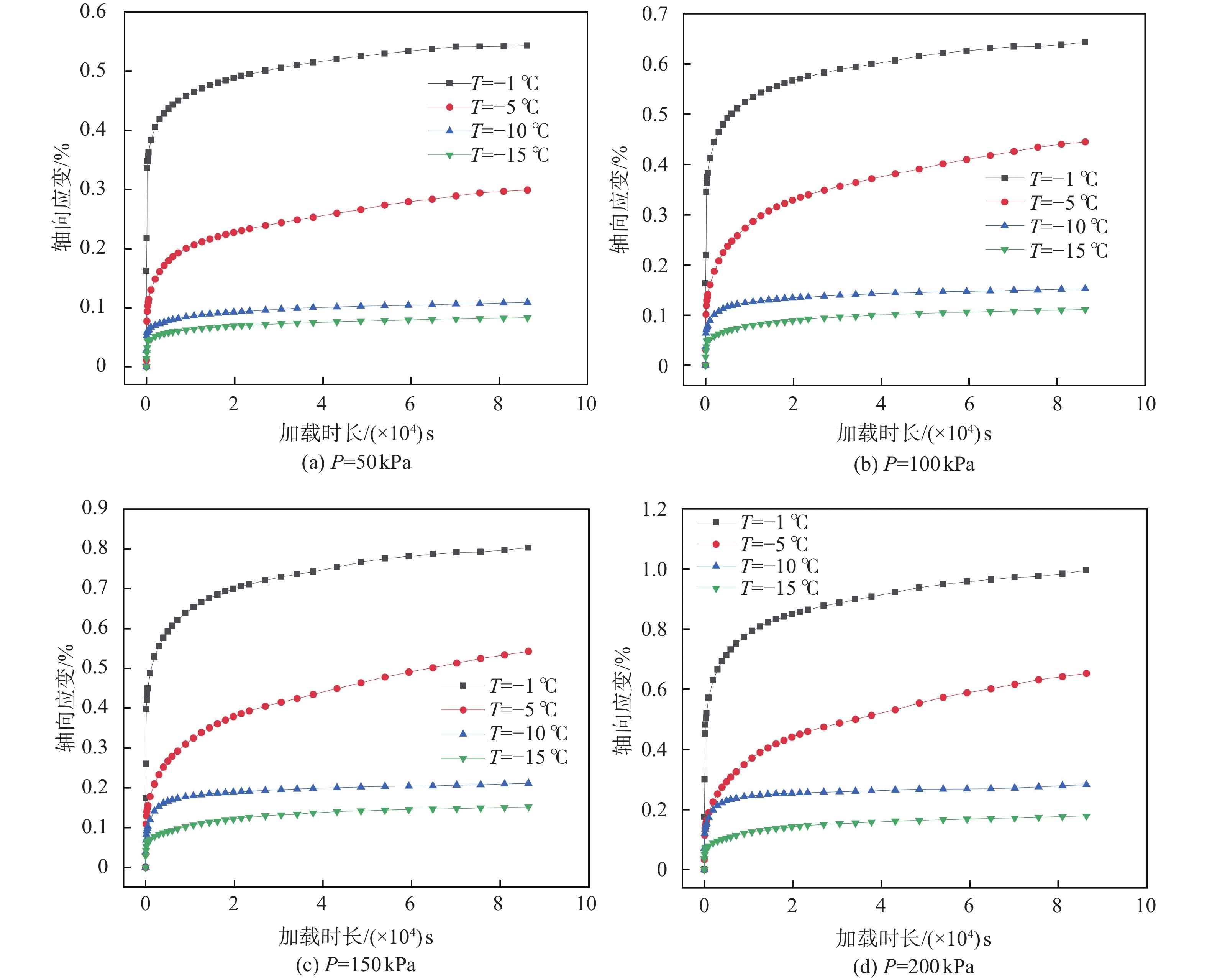
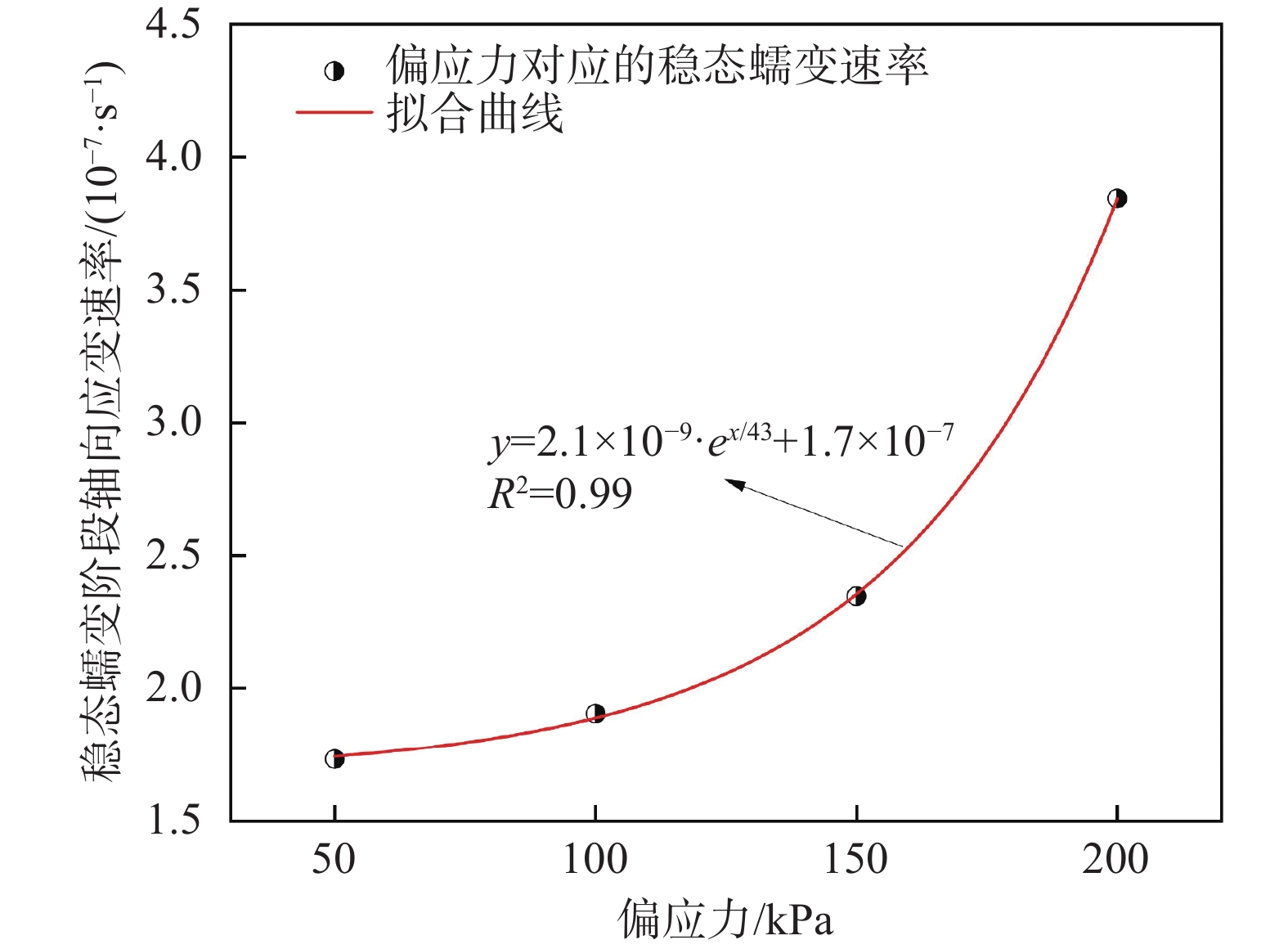
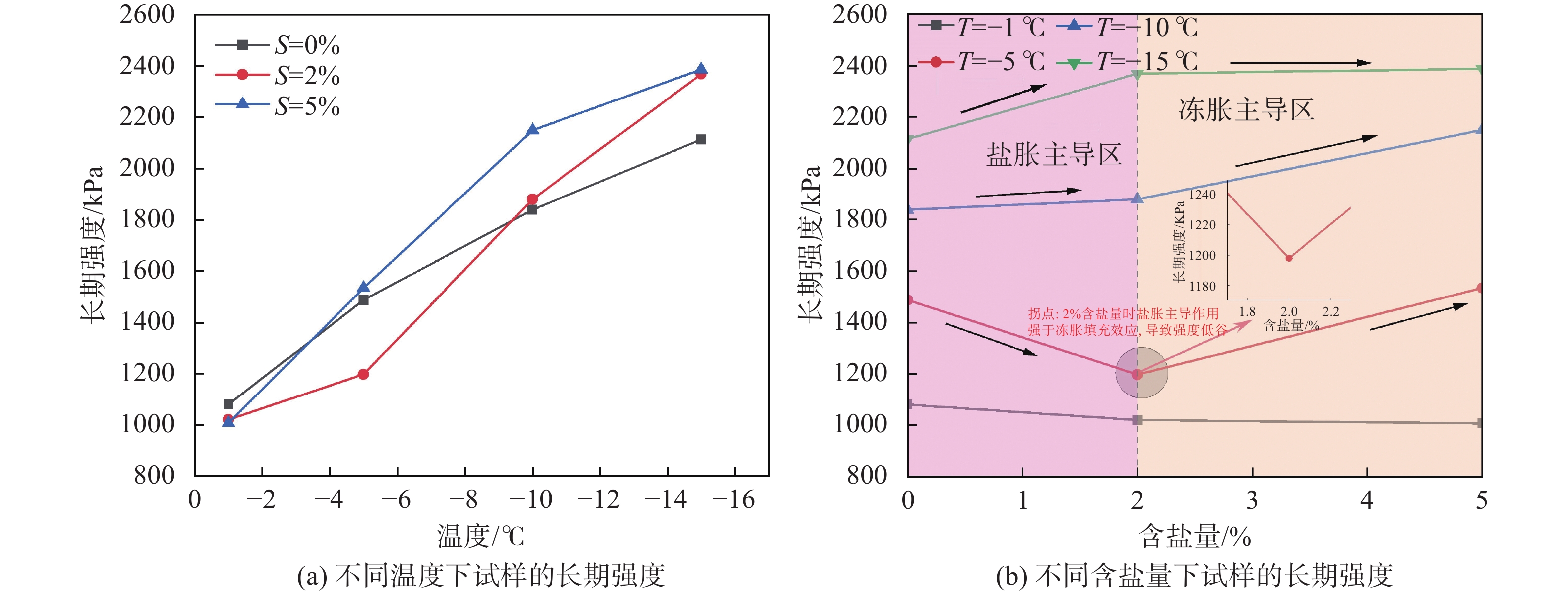
To reveal the long-term strength evolution of sulfate saline soil under low-temperature creep, a series of low-temperature triaxial creep tests were conducted on sulfate saline soil from Hongsibu, Ningxia, using a KTL-LDF-5 triaxial apparatus (temperature T = −1 ~ −15 ℃, salt content S = 0~5%, confining pressure 100 kPa). The steady-state creep rate method was used to analyze the long-term strength characteristics. The results show that: (1) Creep curves exhibit a step-like increase with deviatoric stress, progressing through instantaneous, decaying, and stable stages. (2) The salt-frost heave coupling effect dominates creep behavior. At T > −5 ℃, salt expansion is significant, and higher salt content leads to greater creep deformation. At T ≤ −10 ℃, frost heave filling enhances stability, and higher salt content results in smaller creep deformation. (3) Overall, under low-temperature creep conditions, the long-term strength values of specimens with different salt contents increase as temperature decreases. Except at T = −1 ℃, where the long-term strength shows a slight decreasing trend with increasing salt content, the long-term strength exhibits a piecewise increasing trend with 2% salt content as the boundary under other salt content conditions. Specifically: At T = −5 ℃, the strength decreases first and then increases, reaching a minimum at 2% salt content. At T = −10 ℃, it shows a slow initial increase followed by a faster rate of increase. At T = −15 ℃, it initially increases and then tends to stabilize. Furthermore, the strength of the saline soil is higher than that of the non-saline soil. This study can provide a reference for engineering construction in sulfate saline soil areas.